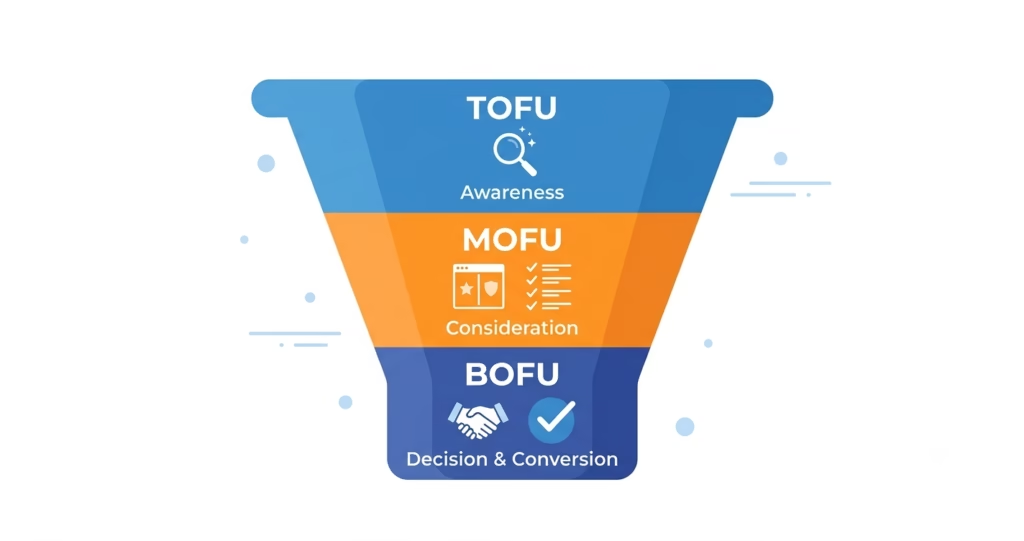
TL;DR
- MOFU stands for Middle of the Funnel — the stage where a lead has named their problem and is comparing ways to solve it.
- It sits between TOFU (awareness) and BOFU (decision), and it’s where you build the trust that gets you into the final vendor shortlist.
- Skip it or do it badly, and you lose leads who already know they have a problem but never learn you can solve it.
- The highest-converting MOFU content types are comparison guides, webinars, case studies, and interactive tools — not more blog posts.
What Does MOFU Mean?
MOFU means Middle of the Funnel. It’s the second stage of the marketing and sales funnel, sitting between TOFU (Top of the Funnel, where leads first discover they have a problem) and BOFU (Bottom of the Funnel, where they’re ready to buy).
A lead enters MOFU once they’ve stopped asking “what’s wrong?” and started asking “how do I fix this?” They know the problem. They don’t know your product yet, and they’re not ready to talk to sales. They’re comparing approaches, reading reviews, and building a mental shortlist.
Your job at this stage isn’t to sell. It’s to prove you understand the problem well enough to be trusted with the solution.
Where MOFU Fits in the Funnel
| Stage | Lead’s mindset | Your goal | Content type |
|---|---|---|---|
| TOFU (Top) | “I have a problem, not sure what it is yet” | Educate, build awareness | Blog posts, guides, social content |
| MOFU (Middle) | “I know the problem, comparing solutions” | Build trust, prove expertise | Comparison guides, webinars, case studies |
| BOFU (Bottom) | “I’ve picked an approach, comparing vendors” | Close the deal | Demos, trials, consultations |
The mistake most teams make is treating MOFU like a shorter version of TOFU or an earlier version of BOFU. It’s neither. TOFU content teaches. BOFU content sells. MOFU content proves — it shows the lead you’ve solved this exact problem for people like them.
Why MOFU Matters for Revenue
Most funnels leak hardest in the middle. A lead downloads your ebook (TOFU works fine), then goes quiet for three weeks before either buying from a competitor or forgetting about you entirely. That gap is a MOFU failure, not a TOFU or BOFU one.
Nurtured leads make 47% larger purchases than leads that go straight from awareness to a sales pitch, according to a frequently cited Annuitas Group study. The exact source report is hard to pin down independently; the number circulates widely across marketing sites, but I couldn’t verify it against an accessible primary document. Treat it as a directionally useful, widely repeated industry figure rather than a hard data point you cite to a client without your own caveat.
What’s easier to verify from your own funnel: leads who engage with MOFU content (a comparison guide, a webinar, a case study) convert to sales-qualified leads at a meaningfully higher rate than leads who skip straight from a TOFU download to a sales call. Check this in your own CRM before you build a strategy around someone else’s number.
7 MOFU Content Types That Convert
- Comparison guides: compare solutions or approaches, not vendors by name. “Should you build in-house or hire an agency?” works. “Us vs. Competitor X” doesn’t belong here; that’s BOFU territory.
- Webinars: a live or recorded session that walks through solving the specific problem your MOFU lead has. Works especially well when you show your process, not just your product.
- Case studies: real examples of how someone with the same problem solved it. Save the full-detail, ROI-heavy case study for BOFU; MOFU case studies should focus on approach, not just outcome.
- Interactive tools: calculators, quizzes, or assessments that let the lead diagnose their own situation. These work because they give something back before asking for a sale.
- Podcasts or video series: lower-commitment than a webinar, good for leads who want to keep researching without filling out another form.
- Buyer’s guides: a structured breakdown of what to look for when evaluating a solution category. Useful when your category has a lot of noise and the lead doesn’t know what questions to ask yet.
- Email nurture sequences: the connective tissue between the other six. A lead who downloads a comparison guide should get a follow-up sequence that deepens the relationship, not a demo request on day one.
MOFU vs. TOFU vs. BOFU: What Actually Changes
The content format matters less than what the content assumes the reader already knows.
TOFU content assumes nothing; it explains the problem from scratch. MOFU content assumes the reader already understands their problem and is now evaluating how to solve it; pitching your product too early here reads as pushy, the same way asking someone to commit on a first date would. BOFU content assumes the reader has picked an approach and is now choosing between specific vendors, including you.
If you’re not sure which stage a piece of content belongs in, ask what question it answers. “What’s wrong?” is TOFU. “How do I fix this?” is MOFU. “Who should I buy from?” is BOFU.
How to Build a MOFU Content Strategy in 4 Steps
- Map your MOFU leads’ actual questions. Pull the questions your sales team hears most often from leads who aren’t ready to buy yet, not the questions TOFU content already answers.
- Build one asset per content type that matters to your audience. You don’t need all 7 types above. Pick 2-3 based on where your MOFU leads actually spend time researching.
- Gate strategically, not universally. A comparison guide behind a form is reasonable. A podcast episode behind a form kills the trust-building purpose of MOFU content.
- Connect MOFU content to a nurture sequence. A standalone asset with no follow-up wastes the lead’s engagement. Every MOFU download should trigger a sequence that moves them toward BOFU.
FAQ
What is the meaning of MOFU?
MOFU stands for Middle of the Funnel — the marketing and sales stage where a lead has identified their problem and is actively comparing solutions, but isn’t ready to talk to sales yet.
What is the difference between TOFU and MOFU content?
TOFU content educates leads who don’t yet understand their problem. MOFU content is for leads who already understand the problem and need help evaluating solutions — it goes deeper and assumes more context than TOFU content does.
What is MOFU in sales?
In a sales context, MOFU leads are those who’ve been qualified past initial interest but haven’t reached a buying decision. Sales teams typically don’t cold-pitch at this stage; they support marketing’s nurture efforts and step in once a lead shows BOFU-stage buying signals.
How do you measure MOFU content performance?
Track MOFU-to-SQL conversion rate (how many leads who engage with MOFU content become sales-qualified), content engagement depth (time on page, webinar attendance duration), and downstream close rate for leads who touched MOFU content versus those who didn’t.
Key Takeaways
MOFU is the stage where trust gets built or lost. A lead who reaches this stage already knows they have a problem — your only job is proving you understand it better than whoever else they’re comparing you to. Get the content types right, connect them to a nurture sequence, and measure MOFU-to-SQL conversion in your own funnel instead of borrowing someone else’s benchmark.

Mansoor Bhanpurawala is the founder of DigitalMansoor.com. With 20K+ followers on LinkedIn, he has been doing SEO since 2012 and, with over 14 years of experience, has helped 600+ clients across multiple industries build sustainable online growth.
With consulting, he enjoys sharing beginner-friendly guides to help others start and scale their blogs and brands. He’s grown client traffic up to 50X and revenue up to 240X. Helped multiple clients get mentions on TOI, Forbes, Mint, etc.


Leave a Comment