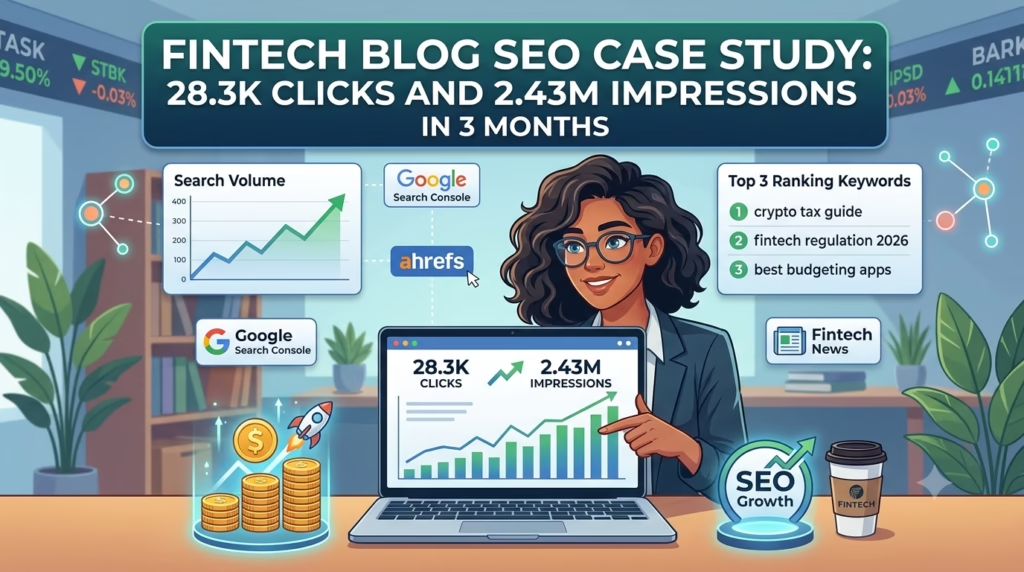
Near zero to 28,300 clicks. Here’s what actually happened.
A fintech blog with no schema, no named authors, and no publishing rhythm doesn’t rank. It doesn’t get crawled with any priority, and it doesn’t earn the trust signals Google and AI search systems both look for now. This client’s blog section was sitting there, technically live, functionally invisible.
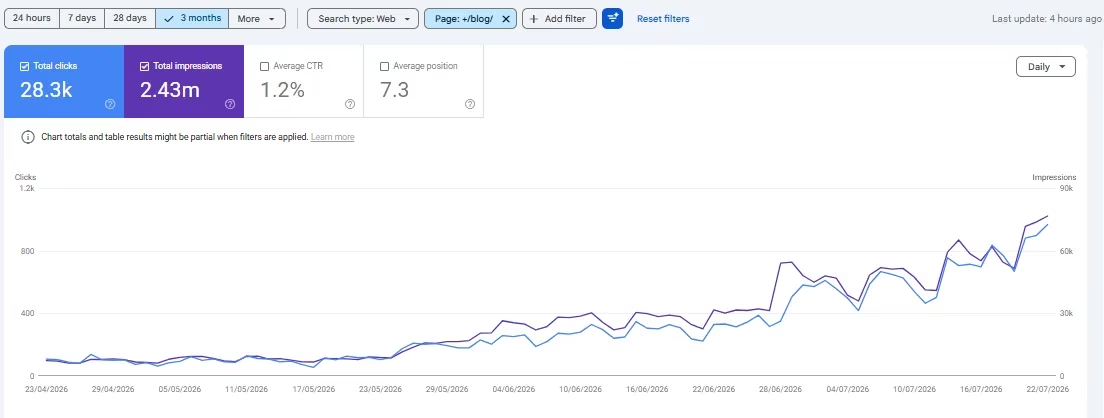
Three months after fixing that, the /blog/ section alone pulled 28,300 clicks and 2.43 million impressions, averaging position 7.3 across its ranking keywords.
Results at a glance
- 28,300 organic clicks to the blog section over 3 months (23 Apr–22 Jul 2026), verified via Google Search Console.
- 2.43 million impressions in the same window, meaning the content is surfacing in search far more than it’s being clicked, room to grow through title and meta work alone.
- Average position 7.3, page-one territory for a blog section that started with next to nothing.
- 1.2% average CTR, consistent with position-7 placement, a lever for the next phase, not a flaw in this one.
The starting point
No email capture, no author bios, no schema markup anywhere on the blog. Content existed, but most of it was stale, some posts hadn’t been touched in years, and nothing on the page told Google or an AI crawler who wrote it or why it should be trusted. Traffic sat in the low hundreds.
Content existing isn’t the same as content a crawler trusts. A fintech blog carries YMYL weight, Google’s own guidelines hold financial content to a higher bar for expertise and trustworthiness, and a blog with zero author identity and zero schema gives a crawler nothing to hang that trust on.
What was done
1. Article and Person schema, site-wide. Every blog post got Article schema tying content to a named author entity. Fintech content without author attribution is exactly the kind of page Google’s YMYL guidance treats with skepticism, this was the first fix, not an afterthought.
2. Author bio blocks added for E-E-A-T. Author credentials went on every post; a content team, not a single byline, given the volume involved (below). Real names, real relevant background, tied to the Person schema so the credibility signal is machine-readable, not just visible to a human reader.
3. A daily publishing cadence: 5 new long-form posts, 1 legacy post refreshed. Each new post ran 1,800–2,200 words. One older post got updated daily, current-year optimization, refreshed data, listicle formatting where it fit. Six posts a day only works at this length if a team is producing them, not one person, and only if each post stays specific instead of turning into templated filler once the pace picks up.
4. Automated internal linking across the blog. New and refreshed posts got linked into the existing content graph automatically as they published, spreading link equity across the section instead of leaving new posts orphaned until someone manually linked them.
The indexing anomaly, explained
The traffic chart isn’t a smooth line, it holds flat for weeks, then steps up sharply around late June and stays there. That’s not a fluke or a tracking error. It’s what happens when enough new, internally linked, schema-tagged content accumulates that Google’s crawl priority for the section shifts, a batch of posts crossed a threshold, and the index caught up over the following days. Anomalies like this are normal in a fast-publishing scenario and worth explaining rather than hiding, a perfectly smooth upward line would be the thing to be suspicious of.
What this means for you
A fintech blog doesn’t need a content overhaul to start ranking. It needs the crawler-facing basics in place, schema, author identity, and a real publishing rhythm, before volume and quality can do their job. Skip the structure and the content sits there unseen no matter how good it is.
Frequently Asked Questions
Does adding schema markup actually improve fintech blog traffic? Schema doesn’t directly boost rankings on its own, but it gives search engines and AI crawlers a clear, machine-readable signal about authorship and content type, both of which matter more for financial content under Google’s YMYL standards. In this case, schema was one part of a combined fix alongside author E-E-A-T signals and consistent publishing.
How long does it take for a fintech blog to rank after SEO fixes? In this case, the visible traffic shift showed up roughly two months into a daily publishing cadence, with a sharper step-up around the two-and-a-half-month mark as indexing caught up with the accumulated content. Timelines vary by starting domain authority, crawl budget, and content volume.
What’s a good publishing cadence for fintech content? There’s no universal number, but consistency matters more than any single post. This case used 5 new long-form posts and 1 refreshed legacy post daily, sustainable only because the content stayed long-form and specific rather than thin or templated.
A fintech client’s blog was producing near-zero organic clicks, with no schema markup, no author credibility signals, and no consistent publishing schedule. After adding Article and Person schema, building out author bios, and shifting to a daily long-form publishing cadence, the blog section drove 28,300 organic clicks and 2.43 million impressions over the following three months, at an average search position of 7.3.
Want a blog section that actually earns search visibility? Book a consultation and we’ll look at what’s blocking yours.

Mansoor Bhanpurawala is the founder of DigitalMansoor.com. With 20K+ followers on LinkedIn, he has been doing SEO since 2012 and, with over 14 years of experience, has helped 600+ clients across multiple industries build sustainable online growth.
With consulting, he enjoys sharing beginner-friendly guides to help others start and scale their blogs and brands. He’s grown client traffic up to 50X and revenue up to 240X. Helped multiple clients get mentions on TOI, Forbes, Mint, etc.


Leave a Comment